ServicesCeramic Coating
Ceramic Coating in Fair Oaks
A ceramic coating locks in whatever is on your paint the day it goes on, good or bad. We inspect and measure the clear coat first and correct what we find. Then we bond a slick, chemical-resistant layer that makes washing faster and slows fading.
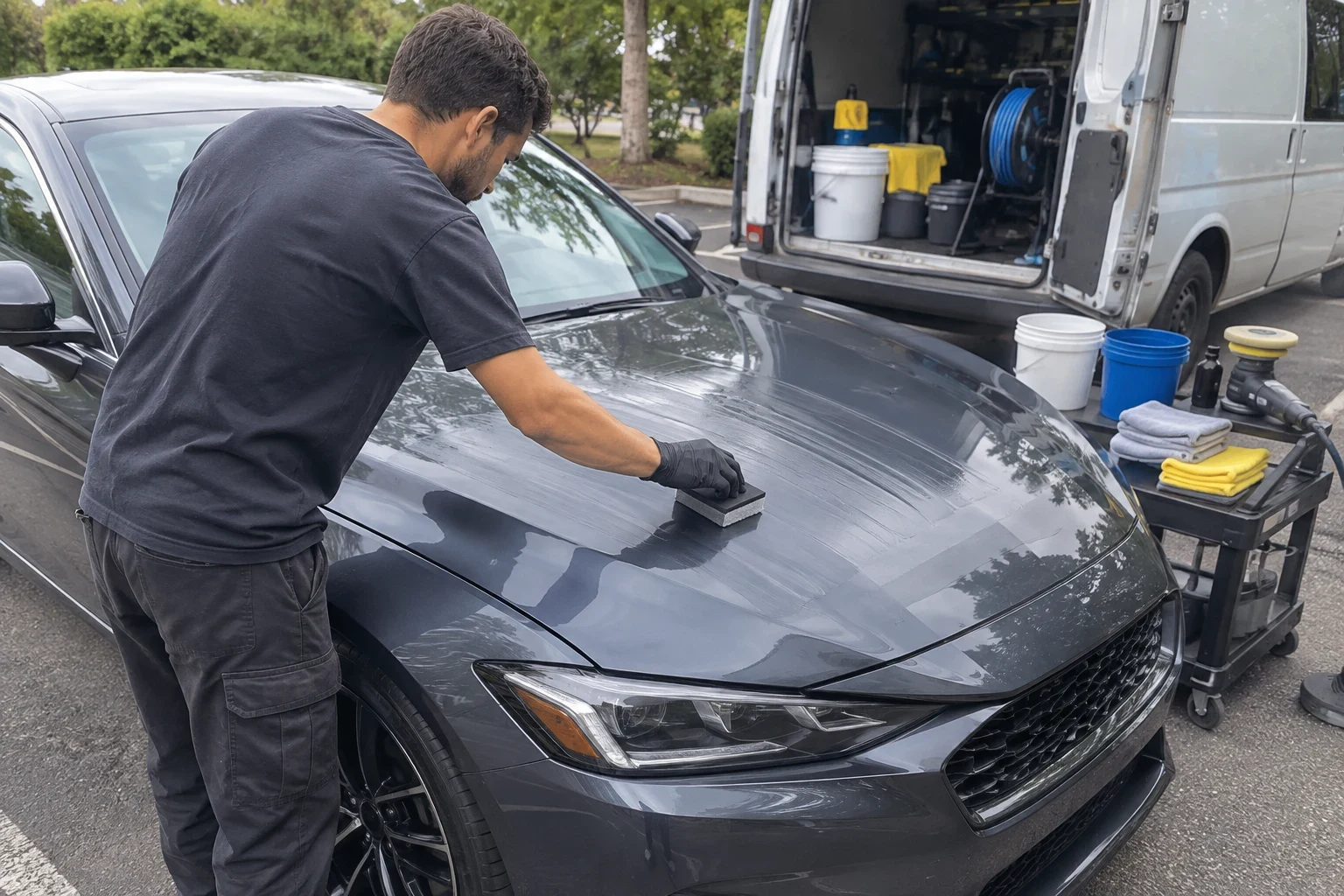
What a Ceramic Coating Does and Doesn't Do
A ceramic coating is a liquid polymer, usually built on silicon dioxide, that cross-links with your clear coat as it cures. The cured layer is harder and far more hydrophobic than wax or sealant. Water beads and sheets off, bird droppings and tree sap sit on top instead of etching in, and road film releases with a gentle wash instead of hard scrubbing.
It is not armor. A coating will not stop rock chips, door dings or deep key scratches, and it will not hide swirl marks. It magnifies the gloss of the surface below it, so any haze or marring left under it stays there until the coating is polished off. That is why we look closely at the paint before we quote the job, and why some customers end up pairing a coating with paint protection film on the front end.
We are certified by multiple PPF, ceramic coating and tint brands, so we can match the product to how you use the car instead of pushing one bottle for every vehicle.
What Our Ceramic Coating Service Includes
- Paint inspection and thickness readings
- We check each panel under inspection lighting and take paint depth readings with a gauge. Thin spots, prior respray and soft clear coat change how aggressively we can polish.
- Full decontamination wash
- A pH-neutral wash, an iron remover to dissolve embedded brake dust and rail fallout, then a clay treatment to lift stuck-on contaminants. Coating over grit traps it against the clear coat.
- Paint correction matched to the findings
- Machine polishing removes swirls, light scratches and water spot etching to the level the paint thickness safely allows. Some cars need a single polishing step; others need compounding first.
- Panel prep wipe
- Polishing oils and old wax keep a coating from gripping the clear coat, so every panel gets a residue-free prep wipe right before the coating goes on.
- Coating application and leveling
- We apply in small sections, watch the flash time and level each one before it grabs. We check for high spots under lights before the car leaves the bay.
- Optional wheels, trim and glass
- Wheel faces, plastic trim and exterior glass can take their own coatings, which help with brake dust buildup and water on the windshield.
Signs Your Car Is a Good Candidate
Water no longer beads
If rain lies flat on the hood instead of beading, the last wax or sealant is gone and the clear coat is bare.
Spots that won't wash off
Mineral rings from sprinkler overspray or drying water often etch into unprotected clear coat. Once corrected, a coating makes that water far easier to remove before it marks.
Fresh delivery from the dealer
New cars still carry transport film residue, fallout and sometimes light dealer-wash swirls. Coating early, after a proper correction, keeps the finish close to new.
Washing takes too long
If road grime and bugs need hard scrubbing, a slick coated surface lets them release with less contact, which also means fewer new wash scratches.
Dull or faded paint
Oxidation from long summer sun exposure can often be polished out. A coating then slows the next round of UV fading.
What Moves the Price of a Ceramic Coating
The coating in the bottle is a small part of the job. Most of the cost is the labor to get the paint ready, and that depends on what we find during inspection. We give you a quote after we see the car so the number reflects your paint, not a guess.
Condition of the paint
A clean new car may need light polishing. A daily driver with heavy swirls and etched water spots may need multi-step correction, which takes much longer.
Vehicle size and shape
A full-size truck or SUV has far more surface than a compact coupe, and deep body lines and vents take extra time to polish and level.
Coating product chosen
Different coatings vary in layer thickness, chemical resistance and how many layers we build. We explain what each option gives you in daily use.
Added surfaces
Wheels off the car, trim, glass and paint protection film each add prep and product.
How a Coating Job Runs at Our Shop
- 1
Consultation and inspection
You bring the car in and we go over it panel by panel with you. We show you what the lights and gauge reveal and recommend the level of correction the paint actually needs.
- 2
Wash, decon and correction
The car is washed, decontaminated and clayed, then machine polished. This stage takes the most time and decides how the finished coating looks.
- 3
Prep and coat
Panels are wiped clean of polishing oils, then coated section by section indoors, away from dust and direct sun that can make the product flash unevenly.
- 4
Cure and handoff
The coating sets before you drive away. We walk you through the first week: keep it dry when you can, skip washing for several days and avoid automatic car washes with brushes.
Ceramic Coating Questions
Will a ceramic coating stop rock chips and scratches?
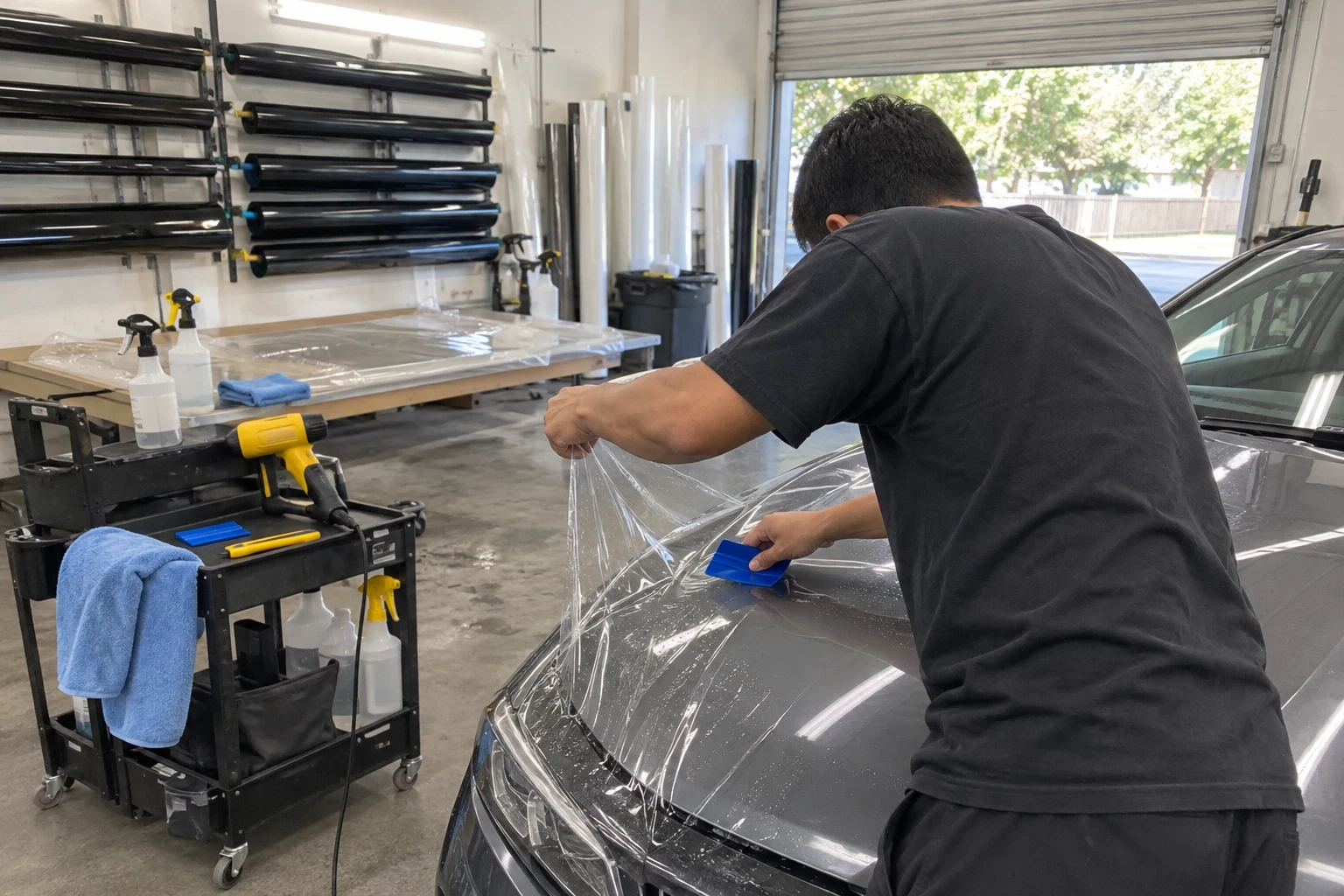
No. The coating adds hardness and slickness that resists light marring from washing, but a rock at highway speed goes straight through it. For impact protection on the hood, bumper and mirrors, paint protection film is the right product, and coating can go on top of the film.
Can you just coat my car without polishing it?
We can, but we will tell you exactly what will be sealed under it first. Coatings magnify what is beneath them, so swirls and spots become harder to fix later. Most cars benefit from at least a light polish.
How soon can I wash the car after it's coated?
Give it about a week before the first wash so the coating finishes curing. If bird droppings or sap land on it in that time, rinse with plain water and blot dry. After that, use a pH-neutral soap and a soft wash mitt.
Does a coated car still need maintenance?
Yes, but less of it. Regular hand washes keep the surface clean so it keeps beading, and an occasional decontamination wash removes mineral buildup that can mute the slickness. Skip waxes, since they sit on top and cover the coating's behavior.
How is this different from the spray ceramic products at the parts store?
Spray products are mostly sealants with some silica added. They are easy to use and wear off fairly quickly. A professional coating builds a thicker cured layer and is applied over corrected, fully prepped paint, which is what lets it bond and last.
Find Out What Your Paint Needs Before It's Sealed
Bring your car to our Fair Oaks shop and we'll inspect the clear coat, explain the correction it needs and recommend a coating that fits how you drive. We work with drivers from Folsom, Carmichael, Orangevale and the surrounding area.