ServicesWindshield Protection Film
Windshield Protection Film in Fair Oaks
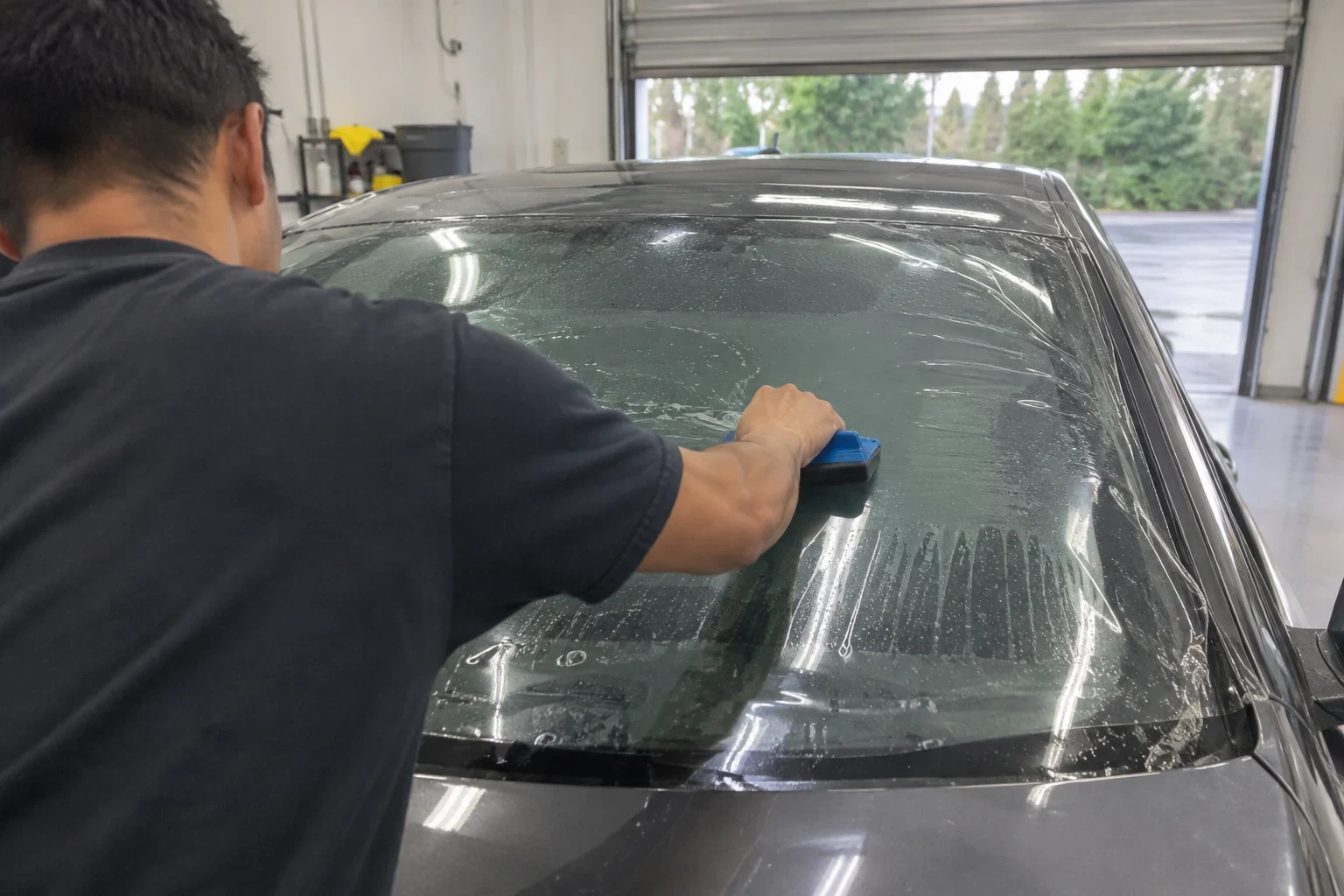
Windshield protection film is a clear, flexible sheet we fit to the exterior of your windshield. Gravel and road grit hit the film instead of the glass, which keeps chips and sand pitting off the windshield itself. We inspect the glass before any install, so film only goes onto a surface that is ready for it.
What the film does and when it makes sense
Most windshield damage starts small. A pebble thrown by a truck tire leaves a star or bullseye chip, and heat cycling or a slammed door can run that chip into a crack. Fine sand does slower damage, frosting the glass in the wiper sweep until oncoming headlights flare at night. The film is a flexible layer that absorbs and spreads that impact energy before it reaches the glass.
It is the right call for new windshields, recently replaced glass and vehicles with expensive windshields carrying cameras, heads-up display coatings or acoustic layers. Long freeway commutes and summer heat in the Sacramento area make chips spread faster, so protecting clean glass early tends to pay off.
It is not a repair. If your windshield already has a running crack or heavy pitting, film will not hide it, and we will tell you so before any install. That is why every job here starts with a close look at the glass, not a roll of film.
What a windshield film install includes
- Glass inspection under light
- We check the full windshield for chips, edge cracks, pitting and old adhesive residue. We also note the camera bracket, rain sensor and any third-visor frit band so the film pattern accounts for them.
- Deep glass decontamination
- The exterior is clay-treated and degreased to lift embedded contaminants, road film and old wax. Film adhesive only holds evenly on bare, clean glass.
- Pattern fitted to your windshield
- The film is cut to the exact shape of your glass, edge to edge, with clearance at the cowl and A-pillar trim. A precise fit keeps edges from lifting at highway speed.
- Heat-formed install
- Windshields curve in two directions, so the film is shrunk to the glass with controlled heat before it is squeegeed down. This removes the fingers and stretch marks that a flat install leaves behind.
- Wiper and sensor check
- After the install we run the wipers and confirm the rain sensor and driver assistance camera view are clear. You leave knowing those systems behave as they did before.
- Brand-trained film handling
- Our shop holds certifications from multiple PPF, ceramic coating and tint brands. That training covers film handling, heat-forming and edge finishing on curved glass.
Signs your windshield needs protection
You just replaced the glass
New glass is the best surface film will ever go on. Protecting it now avoids paying for the same replacement again.
Chips keep appearing
Several small chips in a year means your driving puts the glass in the path of debris. Film takes those strikes instead.
Glare at night is getting worse
Starbursts around headlights usually come from fine pitting in the wiper area. Film will not reverse existing pitting, but it stops it from spreading on new or lightly worn glass.
Your windshield carries a camera
Lane keeping and automatic braking cameras often need recalibration after glass replacement. Avoiding that replacement saves time and a dealer visit.
You follow trucks or gravel haulers
Construction traffic and loose shoulder gravel throw the stones that cause the most chips. Regular exposure is the clearest reason to add a sacrificial layer.
How the day runs at our shop
- 1
Consultation and inspection
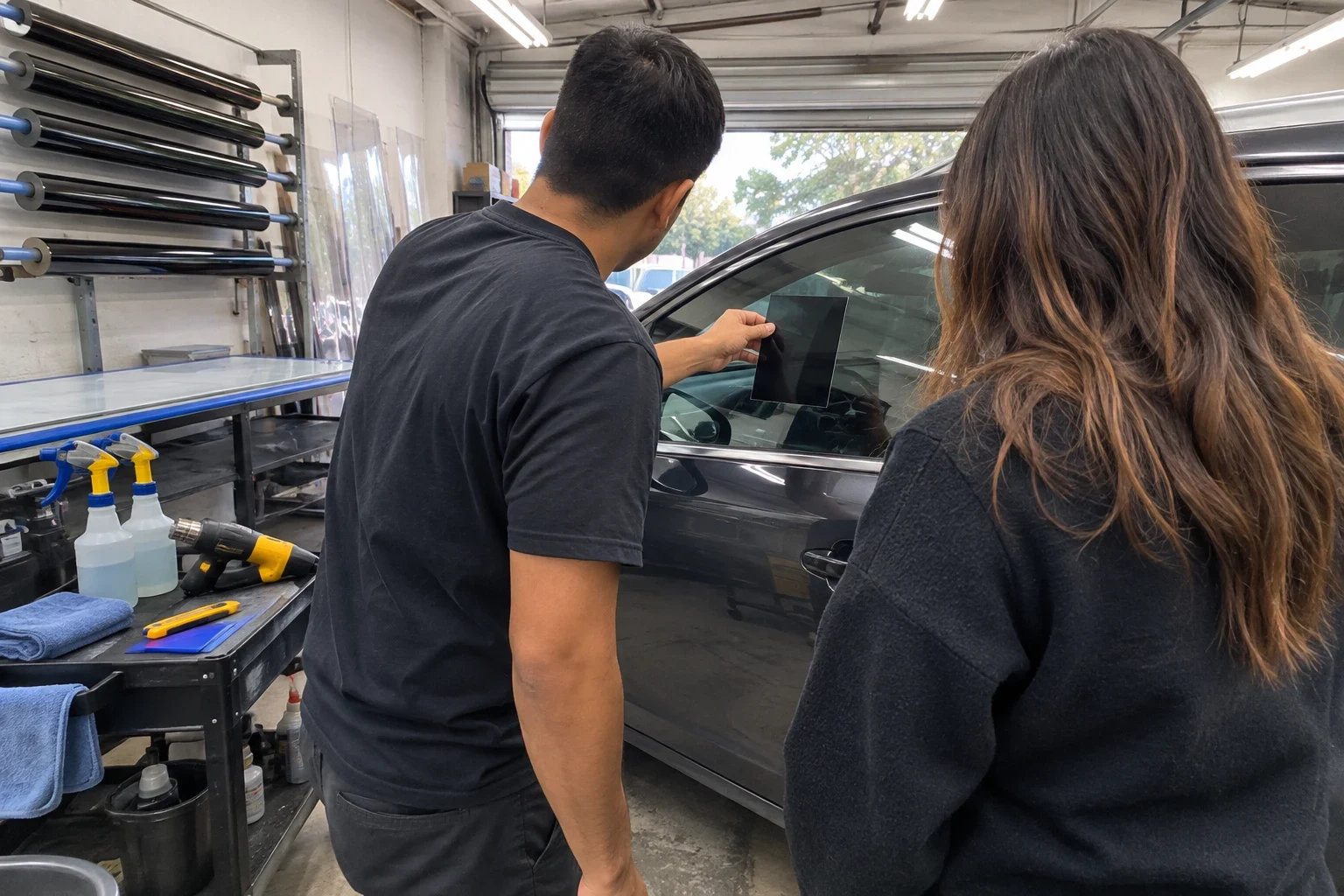
On the phone we ask about your vehicle and the glass. When you bring it in, we inspect the windshield and give you a straight answer on whether film, a chip repair first, or replacement makes the most sense.
- 2
Prep and decontamination
Any small chips are flagged for repair before film goes on, because sealing an open chip under film traps moisture and dirt. Then the glass is cleaned down to bare surface.
- 3
Fit and install
The film is shaped with heat, laid with slip solution, and squeegeed from the center out. Edges are finished tight to the trim.
- 4
Cure and handoff
Small moisture haze can remain for a few days while the adhesive cures, and it clears on its own. We walk you through washing and wiper care before you drive off.
What moves the price
Windshield film is priced per vehicle, and the glass itself sets most of the work. We give you a quote by phone once we know the make, model and condition of the windshield, and we confirm it after the inspection.
- Size and curvature
- Large, steeply raked windshields need more film and more heat-forming time. Flat, upright glass on trucks is quicker to fit.
- Condition of the glass
- Chips that need repair, old film or adhesive residue add prep time before the install can start.
- Sensors and frit areas
- Camera brackets, rain sensors and wide dotted frit bands require careful relief cuts and edge work.
- Film choice
- Film grades differ in thickness, clarity and how they resist wiper wear. We explain the tradeoffs so you choose based on how you drive.
Windshield protection film questions
Something not covered here? (916) 675-8453
Will the film stop every crack?
No. It is built to absorb the small, frequent strikes from gravel and sand, which cause most chips. A large rock at highway speed can still damage the glass underneath. What the film changes is how often that happens.
Can I see clearly through it, especially at night?
Yes. The film is optically clear and does not tint the glass. Installed correctly on clean glass, it should not add distortion or glare. If your windshield already has pitting, we will point that out during the inspection, since the film will not remove it.
Does it affect my wipers or driver assistance camera?
Wipers run on the film just as they do on glass, and we check the sweep and rain sensor after every install. The camera view is checked before you leave. Worn wiper blades will scuff film faster, so we may suggest replacing them.
What happens when the film wears out?
The film is sacrificial, so it is meant to take damage. When it shows wear in the wiper path or a strike mark, it can be removed and replaced without touching the glass.
Can I combine this with other protection?
Many customers pair it with paint protection film on the hood and bumper, where the same debris hits, or with window tint on the side and rear glass. We can plan those together during the consultation.
Protect the glass before the next chip
Tell us about your vehicle and your windshield. We will inspect it, explain what we find, and install film only if it is the right fix.